
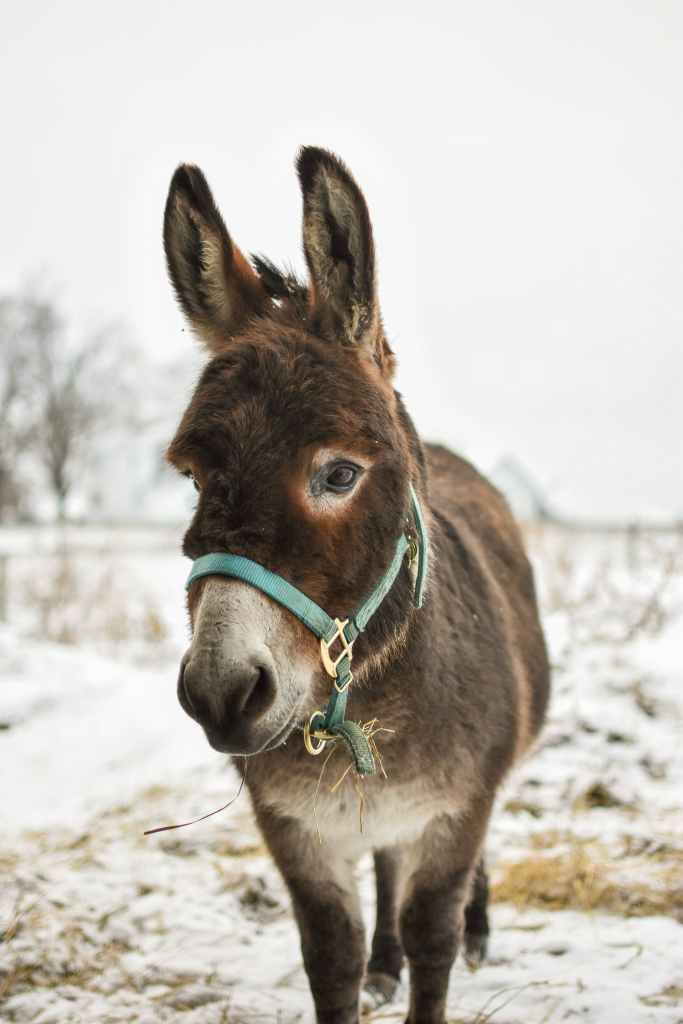

Jesus’s humble arrival on a donkey
The arrival of Jesus on a donkey, oh what an enigmatic sight it was! A perplexing choice indeed. For here was a man with the power to choose any means of conveyance, yet he deliberately opted for the lowly donkey. In this act of bewildering simplicity lies his profound comprehension of what truly matters and his burning desire to forge a connection with ordinary folks. Mounted upon that humble beast, Jesus revealed his utter indifference towards worldly might and glory, instead focusing solely on spreading a message of peace and love to all who would listen. In a world where ostentatious displays of authority reign supreme, the arrival of Jesus on that unassuming donkey burst forth like an unexpected bolt from the blue – a dazzling reminder that true strength emanates from humility and selflessness. It was an extraordinary moment that ignited fervor and anticipation in the hearts of those fortunate enough to bear witness to this awe-inspiring spectacle.
The significance of the donkey in biblical times
During the era of biblical antiquity, one cannot underestimate the bewildering significance and enigmatic presence of the donkey. Far from being a mere vessel for transportation, this unassuming creature assumed an emblematic role denoting servitude and modesty. The humble donkey symbolized a connection to the common folk, those bereft of opulence or authority. Its conspicuous appearances within scriptural narratives serve as poignant reminders that divinity often favors the meek and mundane in order to achieve extraordinary ends.
A particularly noteworthy episode that magnifies the profound essence of the donkey can be found in the tale of Balaam. In this gripping saga, Balaam emerges as a venerated prophet summoned by a monarch to pronounce curses upon the Israelites. As Balaam embarks on his fateful journey, he encounters an ethereal angelic being obstructing his path. Bereft of perceiving this celestial obstruction himself, it is through his loyal equine companion that salvation arrives thrice over; defying progress whenever danger loomed near. This riveting account delineates how this four-legged symbol embodies divine intervention and sagacious guidance alike—underscoring our recollection that even unforeseen entities can emerge as conduits for God’s deliberate will; their indispensable roles instrumental in fulfilling His grand design.
The fulfillment of Old Testament prophecies
The Old Testament brims with perplexing prophecies, veiled in enigmatic detail, foretelling the advent of a Redeemer. These prophetic utterances intricately delineate the manner in which the Messiah would make His entrance, elucidating the events that would swirl around His birth and expounding upon His profound mission on Earth. Thus, when Jesus made his triumphant entry into Jerusalem astride a meek donkey, an overwhelming surge of astonishment and exhilaration surged through those astute enough to discern the consummation of these ancient oracles.
Throughout centuries gone by, the Jewish people ardently yearned for this promised Deliverer; their hearts pulsated with eager anticipation for these prophecies to be fully realized. And in Jesus Christ, they beheld with rapturous delight the long-awaited answers to their impassioned petitions and fervent aspirations. As He traversed into Jerusalem on that humble beast of burden, all prophetic fragments coalesced seamlessly like shattered shards being deftly reassembled—leaving no crevice untouched by conviction or room for skepticism. The fulfillment of these venerated prognostications not only served as an unequivocal affirmation of Jesus’s divine identity as the long-expected Messiah but also ignited a jubilant symphony among those who had pined ceaselessly for salvation’s arrival.
The contrast between a donkey and a horse
In the vast realm of transportation, two creatures emerge, each with its own enigmatic allure – the donkey and the horse. These humble beings hold a perplexing power that elicits contrasting emotions within us. The horse, a symbol of grandeur and mightiness, stands in stark contrast to the unassuming charm exuded by the donkey.
For centuries, horses have been revered for their prowess – their strength and speed captivating all who witness them galloping effortlessly through fields. Their noble presence resonates deeply within our souls as they carry warriors into battle with an air of regality. Adorned with sleek beauty and graceful elegance, they offer an awe-inspiring spectacle that leaves us breathless.
Yet amidst this magnificence lies another creature – one often overlooked but no less captivating. The donkey embodies a burst of rugged charisma that defies expectations. Its stature may be lowly, but its patient spirit is resolute in enduring hardships silently. In this simplicity lies a profound beauty – one that captivates hearts without needing extravagance or ostentation.
These contrasting animals embody paradoxical qualities – strength versus humility, speed versus endurance – leaving us perplexed yet entranced by their complexities. They remind us that true beauty can be found in both grandiosity and unassuming simplicity; it is not bound to any single form or appearance.
So let these creatures guide us on our journey through the realm of transportation – each holding its own enigmatic appeal. Let the horse inspire awe with its majestic splendor while allowing the donkey’s quiet resolve to teach us about inner strength forged through resilience and patience.
May we embrace both sides of this intriguing duality as we navigate life’s diverse landscapes – appreciating bursts of majesty alongside moments of serene gracefulness brought forth by these extraordinary beings: the perplexing yet bewitching donkey and horse
Jesus’s message of peace and humility
As Jesus made his way into Jerusalem, mounted on a meek donkey, he unveiled a message that was both bewildering and captivating – a message of peace and modesty. This esteemed figure, perched not atop an imposing steed but upon the unassuming back of a humble donkey, presented a jarring juxtaposition to the ostentation and hubris typically associated with earthly monarchs and potentates. In this seemingly straightforward gesture, Jesus unequivocally showcased that his dominion transcended the confines of this terrestrial realm; it was instead rooted in love, empathy, and the relentless pursuit of spiritual enlightenment.
By deliberately selecting a donkey as his chosen mode of conveyance, Jesus wholeheartedly embraced the symbolism inherent within this servile creature. Such an intentional decision served to reinforce his teachings regarding the paramountcy of humility and selfless service towards others. The donkey itself, renowned for its gentle disposition as well as its capacity to bear arduous burdens with unwavering fortitude, effectively assumed profound significance as it personified Jesus’s divine mission on Earth. It served as an indelible reminder to both disciples and spectators alike that genuine greatness lies not in wielding power or authority but rather in embodying altruism and demonstrating an unwavering willingness to place oneself at the service of others. Through his unpretentious arrival astride a lowly beast of burden, Jesus resolutely proclaimed that his gospel heralded an era characterized by harmony, affectionate devotion,and a radical departure from society’s conventional understanding of kingship.
The symbolism of a donkey as a servant animal
The seemingly unremarkable donkey, often cast aside as a mere instrument of labor, possesses an enigmatic significance as a subservient creature in the biblical era. Its robustness and tenacity rendered it an invaluable comrade in arduous undertakings, bearing burdensome loads and tilling fields with unwavering determination. Yet it is not solely the physical attributes that distinguish the donkey; rather, it is its steadfast fidelity and eagerness to fulfill its duties. With fervor resonating through my words, I extend to you an invitation to unravel the profound implications underlying the donkey’s portrayal as a symbol of modest servitude.
The pages of scripture unveil countless instances wherein the lowly donkey assumes the role of a humble entity devoted to serving its master. Whether we contemplate Abraham’s trusty companion carrying timber for sacrificial purposes or Mary finding solace atop this noble creature during her pilgrimage to Bethlehem, these narratives shine light upon the symbolic essence attributed to the donkey – that of being selflessly committed. The willingness exhibited by these creatures to bear onerous loads epitomizes servitude itself and serves as a resplendent exemplar of ardor and submission. In an era fixated on power dynamics and dominance over others, let us not forget how profoundly significant it remains for one to embrace humility and find delight in attending diligently upon their fellow beings.
Jesus’s identification with the common people
The perplexing and bursty nature of Jesus’s identification with the common people is a true testament to his compassionate and loving essence. Rather than seeking alignment with the powerful and influential, he deliberately chose to walk hand in hand with everyday men and women who were often marginalized and overlooked. In the company of fishermen, tax collectors, and the destitute, Jesus discovered solace, joy, and a profound sense of purpose. His humble heart resonated deeply with theirs as he uplifted them from their struggles, reminding them of their inherent worthiness and dignity.
In a world that frequently places value on hierarchy and power dynamics, Jesus’s identification with the common people stands as an audacious act of rebellion. It forces us to confront our society’s standards head-on while recognizing the extraordinary beauty and resilience found within ordinary lives. The message delivered by Jesus is resoundingly clear: regardless of social status or background, every individual deserves love, compassion, and respect. He serves as a reminder that it is through acknowledging our shared humanity that we can truly unite for a higher purpose. By striving to comprehend one another’s experiences while lifting each other up along the way; only then can we create a world brimming with justice and equality
The donkey as a symbol of peace and nonviolence
The donkey, with its unassuming presence and gentle demeanor, assumes a perplexing role in the biblical narrative, bursting forth with symbolic significance as an embodiment of peace and nonviolence. Its unwavering and obedient nature serves as a striking contrast to the formidable image of a mighty war horse. By deliberately selecting this humble creature for his triumphant entry into Jerusalem, Jesus effectively communicates a profound message about his mission and teachings.
In embracing the donkey, Jesus unequivocally declares that his kingdom derives no strength from power dynamics or displays of aggression; rather, it thrives on love and compassion. This act represents an unprecedented revolution within a society dominated by militaristic prowess and political turmoil. As he mounts this unpretentious beast, Jesus epitomizes an alternative form of leadership – one that places paramount importance on peace, humility, and the welfare of others.
Consequently, the donkey assumes extraordinary symbolism as it becomes synonymous with Jesus’s call to followers to adopt a lifestyle that renounces violence while actively seeking harmony through acts of benevolence and mercy.
The donkey as a sign of Jesus’s kingship
Jesus’s choice to ride into Jerusalem on a donkey may appear perplexing and unexpected for someone of his status as a king. However, it was a purposeful and impactful symbol that he intentionally employed to represent his kingdom. During biblical times, the donkey was frequently associated with qualities such as peace and humility. By selecting this humble means of transportation, Jesus deliberately rejected the extravagant display and grandeur often linked with earthly kingship. Instead, he presented himself as a servant-king whose authority stemmed from love and righteousness rather than worldly power.
The significance of the donkey in relation to Jesus’s kingship extends beyond mere mode of travel. It encapsulates Jesus’s message of peace and nonviolence in an intricate manner. In a world plagued by oppression and conflict, Jesus aimed to establish a realm where love and compassion reigned supreme. Through riding on a donkey, not only did Jesus assert his own kingship but he also conveyed his mission to bring forth an era characterized by peace, justice, and reconciliation. This act served as a revolutionary proclamation that challenged conventional notions of what it meant to be king while extending an invitation for all individuals to partake in this peaceful revolution alongside him.
The donkey’s role in Jesus’s triumphal entry into Jerusalem
The donkey, in all its perplexing simplicity, played a role of immense significance in Jesus’s triumphant entry into the bustling streets of Jerusalem. As he embarked on this journey astride the unassuming back of this creature, an air thick with anticipation and excitement engulfed the surroundings. The mass of people congregated around him, brandishing palm branches and erupting with exultant praises that resonated through the city walls. In doing so, they acknowledged his divine presence as the long-awaited Messiah—their savior who had arrived at last.
Such a momentous occasion could only be described as an outpouring of pure jubilation—a grand spectacle wherein not just any animal bore witness to Jesus’s advent but one that heralded ancient prophecies come to pass. This humble donkey carried upon it more than mere physical weight; it symbolized fulfillment—proof incarnate that hope and salvation had finally reached their pinnacle within these hallowed grounds.
In this remarkable entrance, however, the donkey transcended its simple role as a mode of transport—it became an emblematic manifestation of Jesus’s profound message—one rooted in peace and humility. Unlike a regal steed whose very presence might have evoked notions of military might and dominance, this lowly beast stood in stark contrast—a poignant statement unto itself. In selecting such an unpretentious form for his arrival, Jesus sought not only to reaffirm his mission but also to challenge expectations set by conventional rulers who sought conquest through force alone.
By choosing this docile creature over any other majestic mount or chariot fit for royalty, he defied societal norms with unwavering resolve—giving prominence instead to values held dear: love, compassion,and nonviolence. Every step taken on that day was deliberate—an intentional act meant to create ripples across time—underscoring how transformative power could emerge from even the most seemingly inconspicuous corners of existence.
The political implications of Jesus’s choice of transportation
The profound political implications that arise from Jesus’s selection of transportation are truly bewildering. By opting for a modest donkey instead of the expected majestic steed, Jesus not only defies conventional wisdom but also launches a bold critique against the prevailing powers that be. In an era where horses were customarily reserved for military commanders and individuals of elevated social standing, Jesus deliberately opts for a humble donkey – an unassuming creature associated with laborious agricultural tasks and unwavering humility.
This intentional act of riding upon a lowly donkey not only challenges societal norms but also serves as a vivid illustration of Jesus’s message centered on peace and humility. Rather than pursuing power through force or ostentatious displays, Jesus advocates for an alternative form of kingship – one firmly rooted in love, compassion, and selfless service to others. The donkey becomes symbolic of his identification with common folk and his steadfast commitment to nonviolence; it stands in stark contrast to the oppressive rulers who held sway during those times. Indeed, this profound statement forcefully interrogates the existing political order while emphatically underscoring the timeless values upheld by Jesus: peace and justice.
The donkey as a representation of Jesus’s mission on Earth
The donkey, handpicked by Jesus to herald His momentous arrival, stands as an enigmatic emblem of His celestial assignment on this terrestrial plane. This unassuming creature, typically linked with lowly servants and ordinary individuals, encapsulates the very essence of Jesus’s proclamation of affection, empathy, and servitude. By mounting upon a donkey’s back, Jesus vividly personified His ardent resolve to extend aid towards society’s marginalized souls – those oppressed and forsaken – thereby reaffirming His sacred duty to proffer hope, restoration, and redemption unto all.
With each resolute stride taken by the donkey in its gracious gait forward, Jesus’s divine purpose materialized tangibly before mortal eyes. A purpose deeply rooted in selflessness; for this indomitable beast tirelessly pressed onward while bearing the immense burden of salvation upon its sturdy frame. Just as willingly as the humble donkey shouldered such weighty responsibility, so did Jesus fervently embrace laying down His own life for humanity at large – thus unveiling the boundless depths of sacrificial ardor within Him. This meek yet mighty creature not only symbolized Christ’s modest advent but also reverberated with resonance regarding his teachings on empathy and benevolence: potent reminders that transformative power lies within acts of service rendered unto others. The silent testimony offered by this remarkable equine speaks volumes concerning the profound impact destined to emanate from Jesus’s mission onto our world; it serves as a tangible embodiment of Christ’s divine purpose manifest upon Earth’s realm.
The donkey’s significance in relation to Jesus’s crucifixion
In the perplexing and tumultuous account of Jesus’s crucifixion, the donkey assumes a profound role, its presence bursting forth with intense symbolism interwoven into this pivotal event. As Jesus bore the weight of all humanity’s transgressions upon his weary shoulders, it was the unassuming donkey that faithfully accompanied him, resolute and unwavering. Amidst the anguish and desolation enveloping Jesus, the donkey stood as an illuminating beacon of hope, a poignant reminder of the indomitable love and boundless compassion embodied by Christ.
With every step taken along that arduous path, the donkey murmured silent words of unity, compelling us to stand steadfastly beside those who endure suffering even amidst life’s bleakest hours. Its mere presence became synonymous with sacrifice and selflessness in perfect harmony with Jesus’s own redemptive journey. The unwavering allegiance displayed by the donkey towards Jesus as he traversed towards his imminent crucifixion stands as an awe-inspiring testament to both the enormity of his sacrificial act and profundity of his love.
The significance attributed to this humble creature within the context of Jesus’s crucifixion cannot be underestimated; instead it serves as a perpetual reminder that even amid unfathomable agony there exists forever a glimmering flame of hope—a wellspring from which strength can be drawn to navigate through life’s most harrowing moments.
The donkey as a symbol of Jesus’s sacrificial love
The perplexing sight of Jesus, the Messiah and chosen one, riding into Jerusalem on the back of a meek donkey is an awe-inspiring symbol of his sacrificial love for humanity. It defies expectations and deflates societal notions of leadership that are often intertwined with grandeur and power. Instead, Jesus, in all his profound wisdom, consciously embraced humility and selflessness. He understood that genuine love and service demand sacrifice. Thus, this seemingly simple act of mounting a lowly donkey reflects his resolute commitment to relinquish his own life for the redemption of mankind.
Furthermore, within this portrayal lies the bursting significance of the donkey itself as a powerful symbol embodying Jesus’s sacrificial love. Throughout biblical times, the humble donkey was predominantly viewed as an animal devoted to serving others and bearing burdens. Its purpose revolved around carrying heavy loads or transporting individuals while fulfilling practical needs. By deliberately selecting this unassuming creature as his mount, Jesus not only identified himself with ordinary people but also underscored willingly shoulderinthe burdenof humanity’s transgressions.The very act exemplifiedhis limitless loveand unwaveringdedicationto bestowing salvationand hope upontheworld,no matterthe exorbitant price involved.Thedonkeyservesasaferventcompanion—humbleyetfaithful,andinauspiciousmannerreflectsJesus’s unfathomableloveandsteadfastcommitmenttoselflessly sacrificinghimselfforthemoralrejuvenationofallhumankind
The donkey’s connection to Jesus’s teachings on compassion and kindness.
The enigmatic and mystifying donkey, inextricably intertwined with the profound teachings of Jesus, serves as an embodiment of compassion and benevolence. In a mesmerizing display of love and understanding, Jesus utilized this unassuming and docile creature to epitomize his message.
At each deliberate stride taken by the donkey, it not only carried the physical weight of Jesus but also bore the immense burden of his celestial mission to disseminate affection and enlightenment. The mere presence of this humble being impelled individuals to embrace their own modesty while acknowledging the significance inherent in every living entity within God’s creation. It metamorphosed into a sentient emblem representing Jesus’s sagacity, serving as a constant reminder for humanity to approach one another with magnanimity and extend kindness indiscriminately, irrespective of social standing or superficial appearances.
Indeed, the symbiotic association between the donkey and Jesus’s revered teachings encapsulates the quintessential essence of his divine proclamation – an exhortation to reciprocate love amongst ourselves just as he has ardently bestowed upon us.
 DONKEY CLUB
Leave a comment